
Resilience
Visiting hurricane-damaged preserves illuminated what held against the storms.

I'm no stranger to juggling multiple projects at once. But with what's going on in the United States, and the world's understandable reaction to our political shift, it's tough to stay focused. The winds of change aren't just buffeting. They're a Category 5 hurricane. Or higher.
John and I wrapped up March with our final week-long expedition into Florida's wilds for the sake of the new Hiker's Guide to the Sunshine State. Most of our destinations were revisits to parks and preserves we'd been to before. We needed to see how they survived Milton, Helene, Debby, Idalia, and Ian. Of course we expected impacts, which is why we returned to places we'd hiked and biked last year.
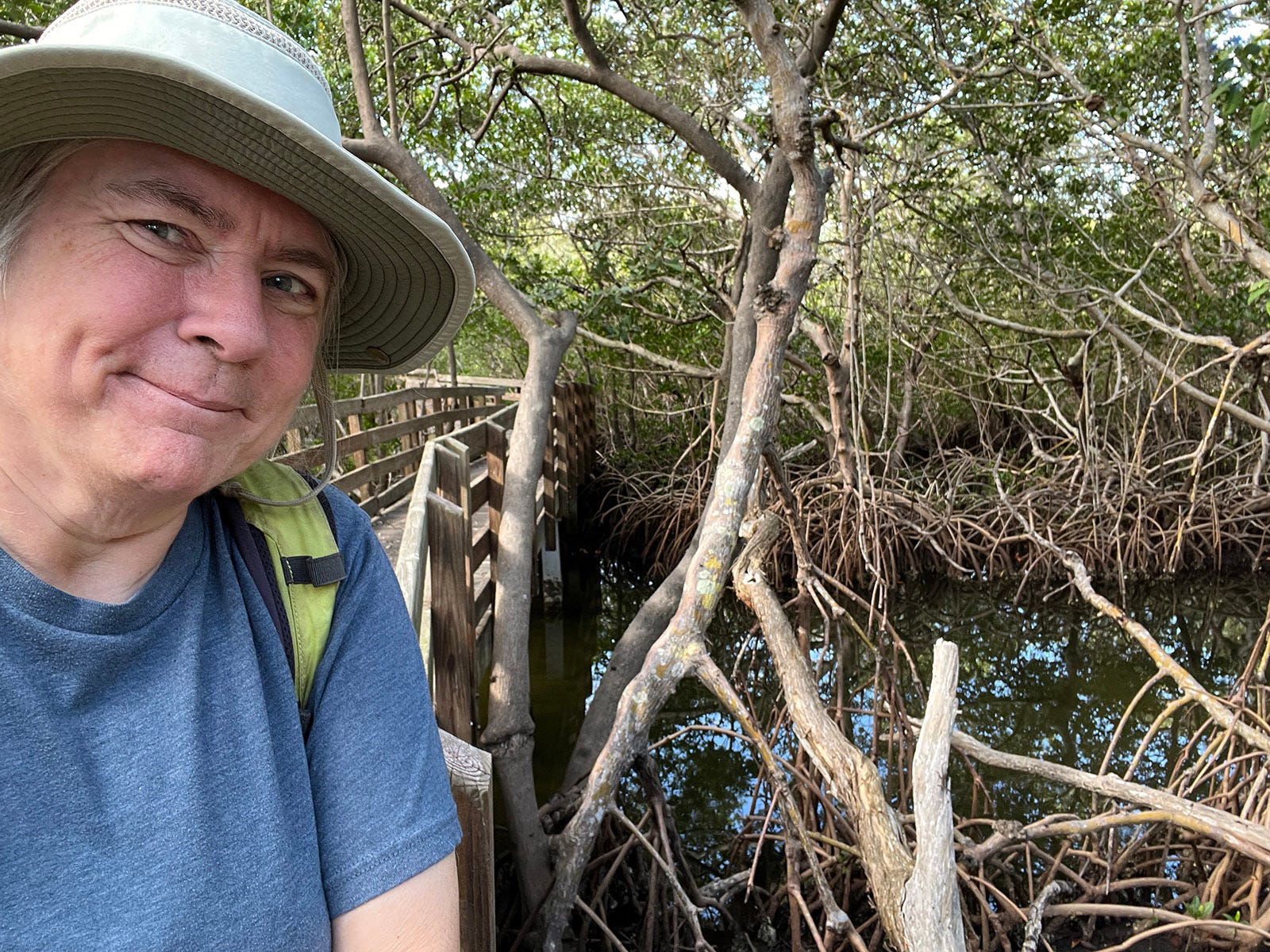
A deep dip in temperatures spurred us back into field research a week earlier than planned. Why not take advantage of mornings in the 50s in Port Charlotte and Venice? Most importantly, all of the preserves we wanted to revisit had finally reopened. That week.
The preserves that haven't opened are along the bays and the barrier islands off Englewood, Venice, Sarasota, and Bradenton. Those islands took the brunt of the storm surge and the wind. There's a reason they're called barrier islands.
Decades ago, when I visited an old friend who'd spent much of her life in Clearwater, she shook her head at the amount of new construction going on around her. "My daddy ran hogs and cattle on this island, that was all it was good for." Sadly, developers thought otherwise.
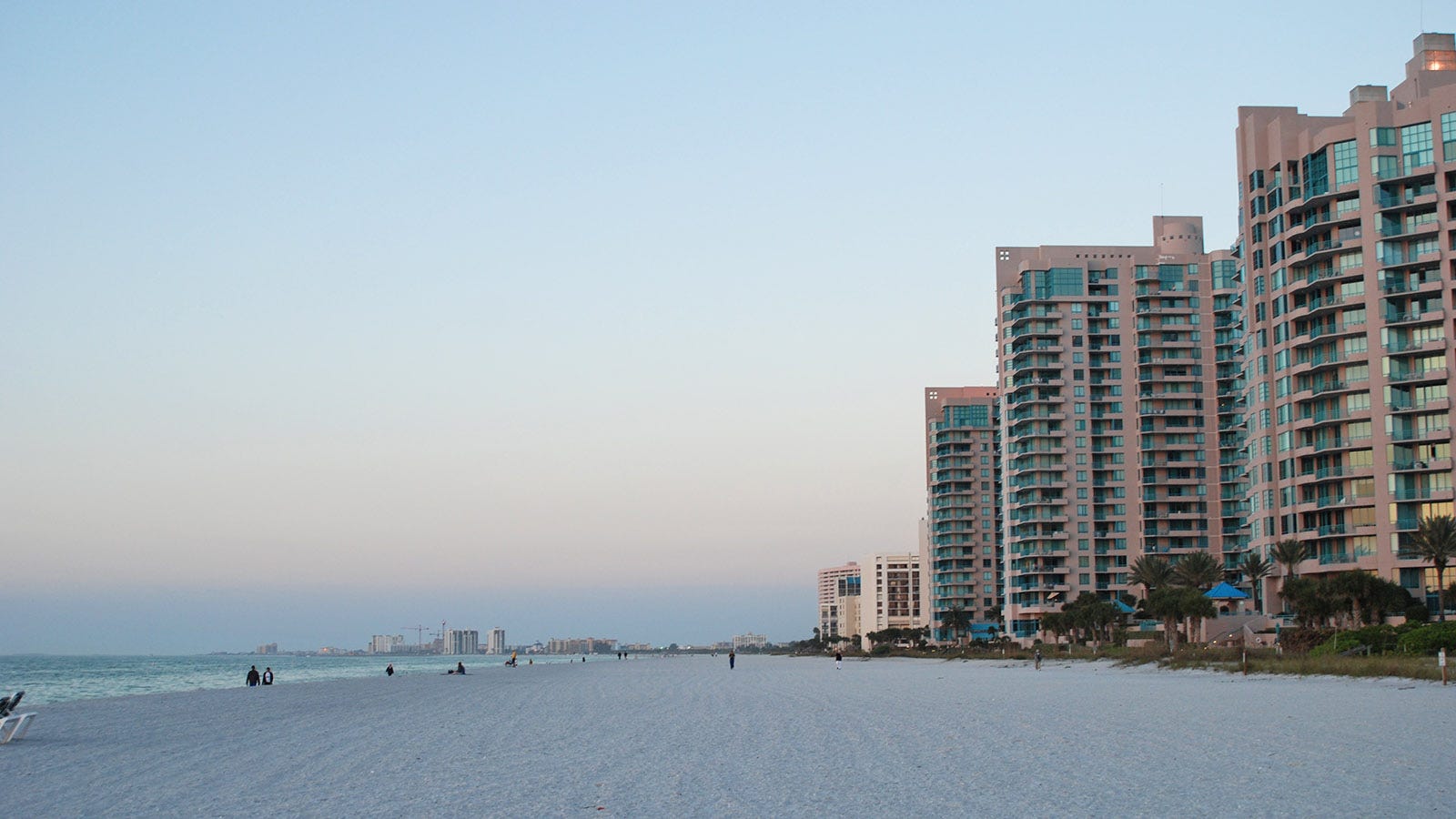
Why people choose to live in multi-million dollar waterfront properties where nature can reclaim the landscape during any hurricane season defies my comprehension. It seems to be denial -- "it's not going to happen to me" -- that colors those sorts of choices. That denial applies to politics, too, now more than ever. Forgive me a little pop psychology, but I think this type of denial is rooted in our culture's attitude towards death. "It's not going to happen to me" helps people get through the next day. And the day after that.
Short-term thinking, not resilient thinking.
Resilience weighed heavy on my mind while walking paths I'd trodden in the past. Where trees hadn't simply snapped in the wind, so many oaks and pines stood tall but dead. Browned needles. No new oak leaves. At Cedar Point in Englewood, the cedar trees were largely wiped out too.
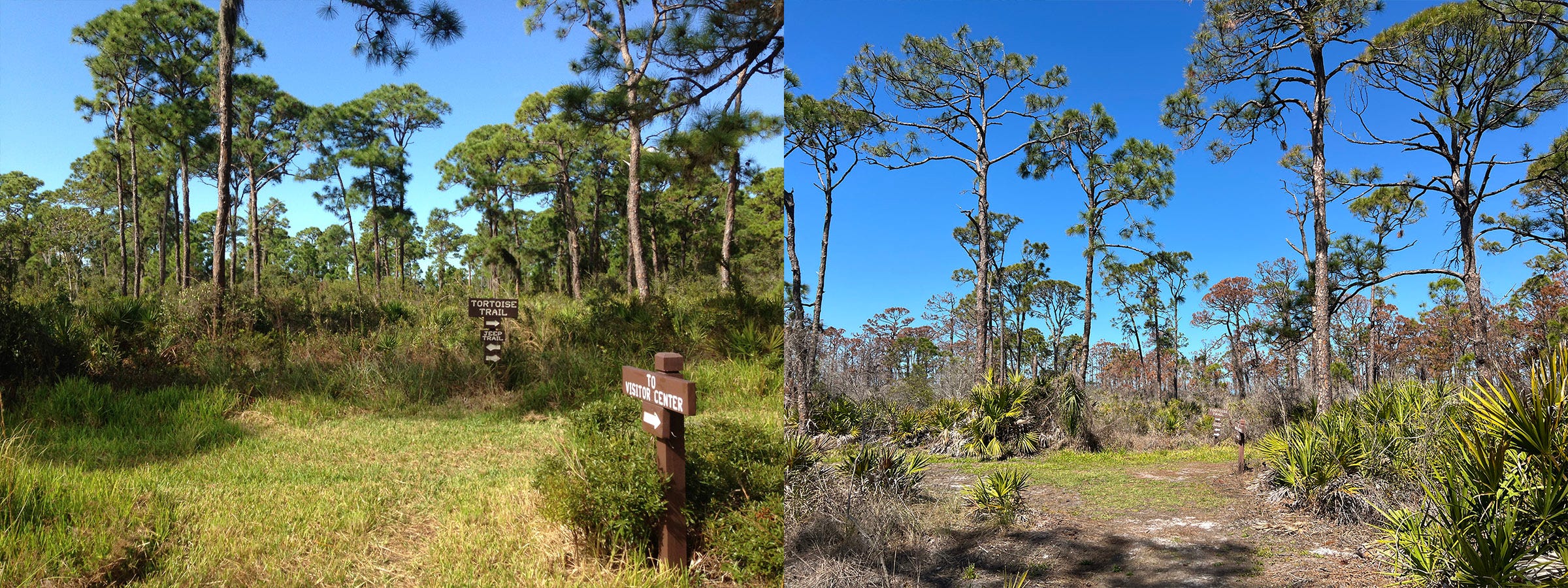
I'd attributed it to wind-blown salt spray at first, the kind of damage we'd been horrified to discover along A1A driving north after Hurricane Matthew. Then a naturalist told me the storm surge that swept across Cedar Point was at least nine feet above the level of Lemon Bay. It tore a new pass through Manasota Key. I'm guessing it pushed inland far enough, right up Oyster Creek, to saturate the roots of these trees with salt. If the barrier island held, would the older trees have been protected? Perhaps. A handful of the largest ones on the highest ground survived.
Coastal vegetation used to soaking in salt water bounced back quickly. Mangroves anchor islands, and they did just that at Cedar Point. The point remains.
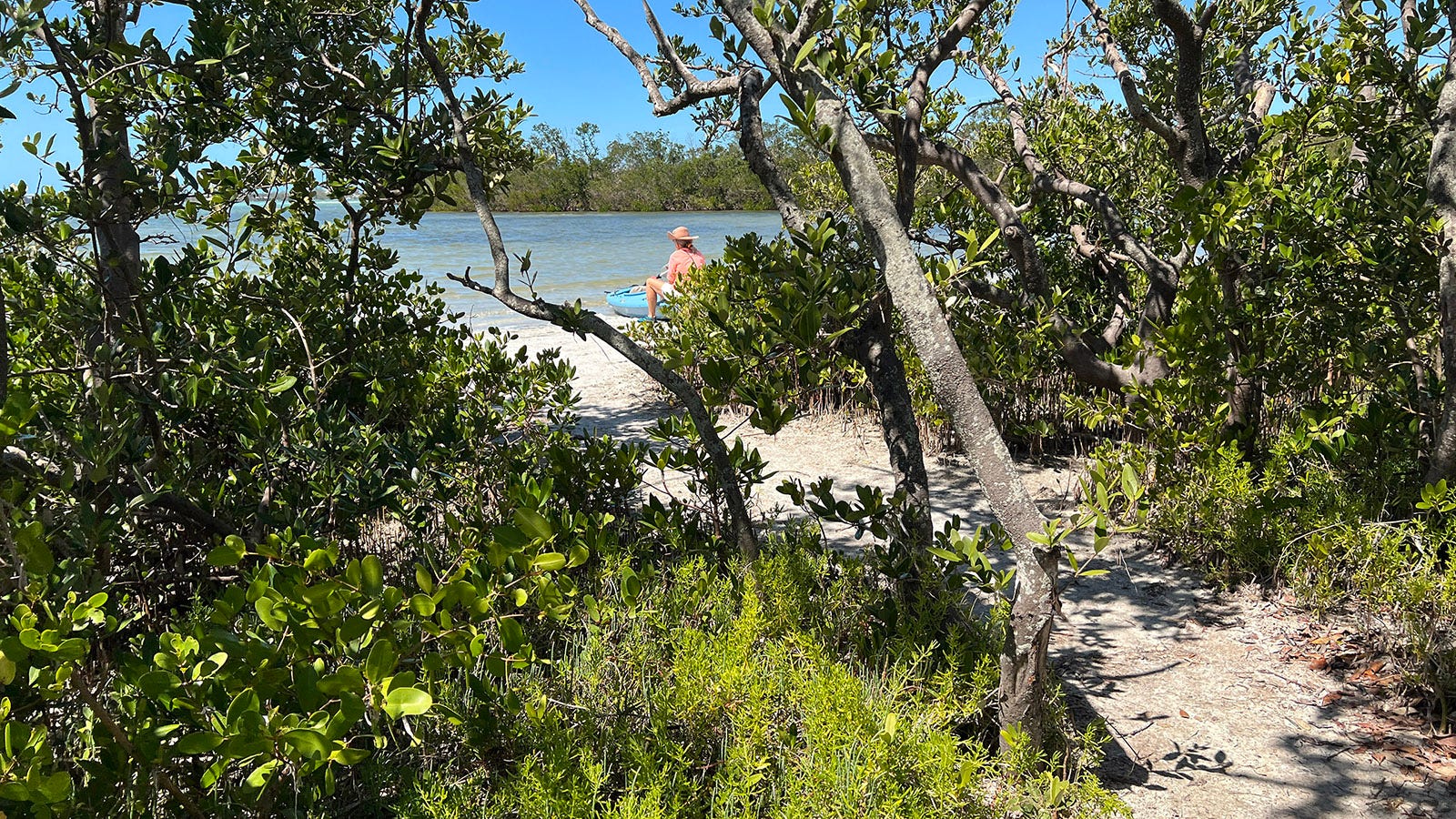
The same was obvious at the Manatee County preserves we revisited that had been hit by both Helene and Milton's winds and storm surges. Their mangrove shorelines tattered a little, but held. It was the taller trees that took the beating from the wind, the mature gumbo-limbos and oaks in particular. They toppled, peeling back the tropical canopy at the Portavant Mounds at Emerson Point. Now soaked in sunshine, the understory is compensating with new, riotous growth.
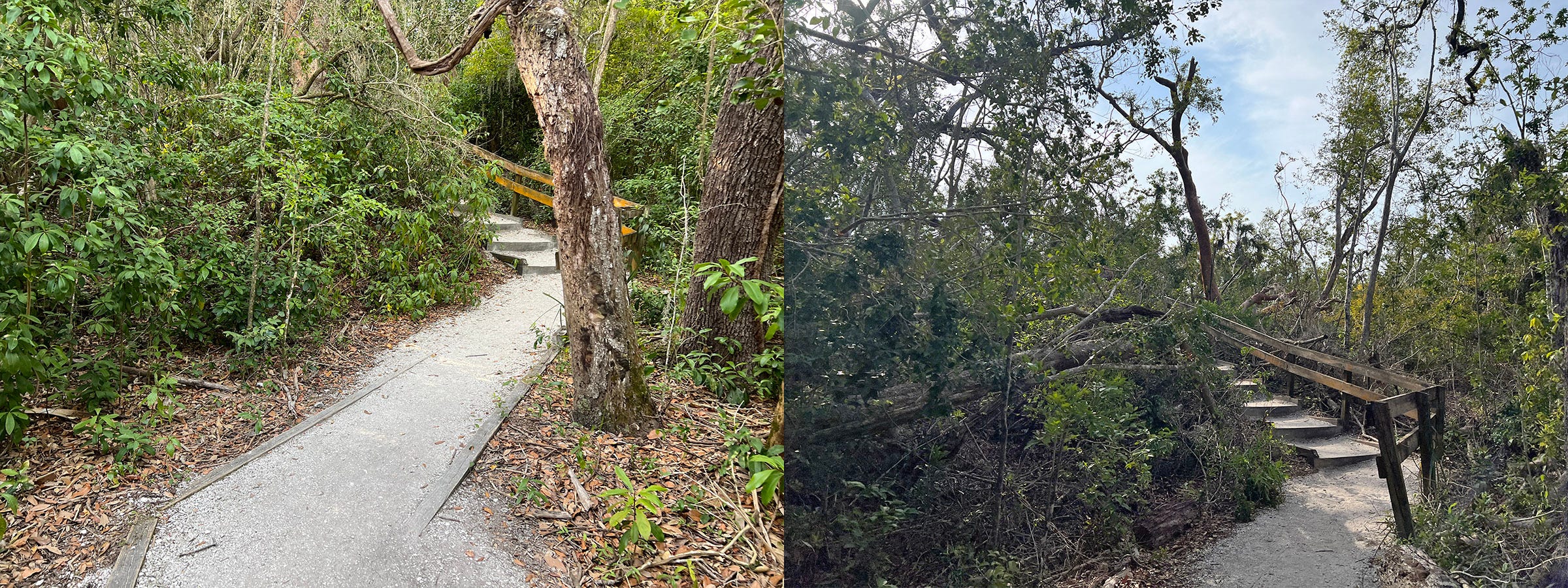
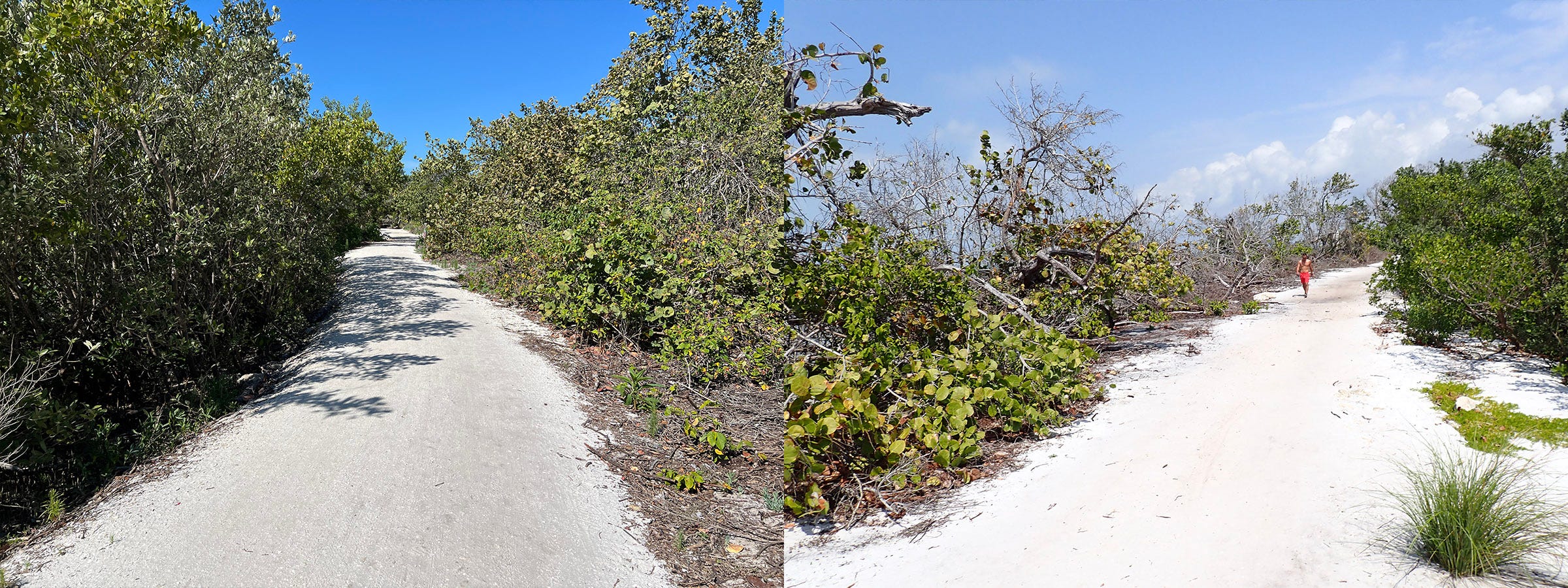
Trails along the southern shore of Tampa Bay didn't wash away as we'd thought they might. Instead, the coastal paths at Robinson Preserve, Emerson Point, and DeSoto National Memorial now have stretches of deep soft sand. Many boardwalks, observation decks, and man-made berms took a beating, but repair work is underway.
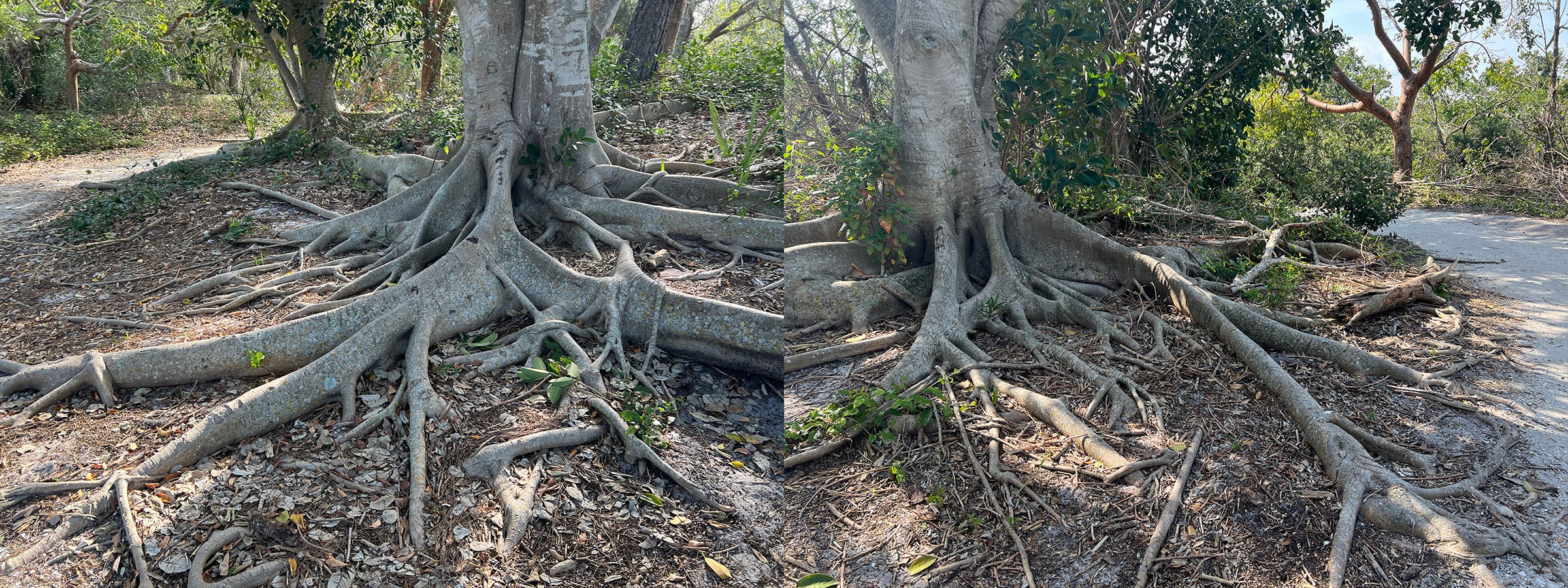
The biggest surprise? The tall observation towers at Manatee County's preserves remained unscathed. They must be anchored well. Which turned my thoughts to the many ficus trees that survived. Particularly one I passed along the Tower Trail at Emerson Point while climbing to the tower.
Tall and thick, many of the gumbo-limbos on the ancient mounds in this preserve uprooted in the wind. A banyan tree at Robinson Preserve shredded, despite its core of dangling roots. The tops of pines snapped off in all the preserves. The crowns of the taller oaks were denuded. But the broader, lower, oaks, and the mangroves, and this particular ficus stood firm. Its canopy thinned, its branches were battered, but by anchoring itself with an extensive root system, it didn't budge.
What are our anchors? Home and family, our belief systems, how we've educated ourselves. The people we surround ourselves with. The friends we call for advice. The communities of like-minded souls surrounding what we hold dear: creative pursuits and social causes. There are more, of course. They differ for us all.
I believe the broader they are, the more diverse they are, those anchors are what make us as individuals stronger. They give us resilience.
Something we need plenty of when the winds of change blow at hurricane strength.
PS. I came across this article yesterday about gopher tortoises swept across the open waters of Tampa Bay by the storm surge of Hurricane Helene. The fact they survived the experience is amazing. How they've adapted to their unplanned relocation is an eye-opener. Talk about resilience.